PhD in Computer Science | Adelaide University

Bowen Yuan

Human–AI Interaction for Spatial and Physical Tasks

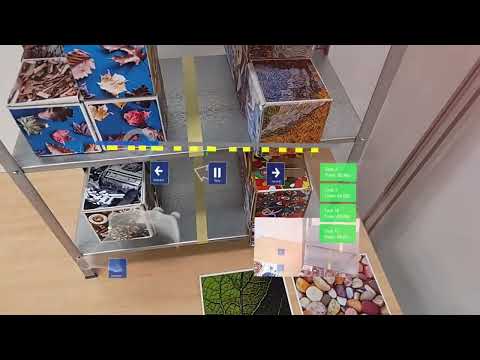
I design and study human–AI systems that help people carry out complex spatial and physical tasks. My research turns expert demonstrations into adaptive augmented-reality guidance, using multimodal signals such as gaze, motion, speech, and spatial context to decide what guidance to show, when, and where. I am now extending this work toward embodied AI agents and human–robot collaboration in immersive environments.

  • Human–Computer Interaction
  • Augmented & Mixed Reality
  • Spatial Computing
  • Multimodal Human–AI Interaction
  • Intelligent Task Guidance
  • Embodied AI & Human–Robot Collaboration
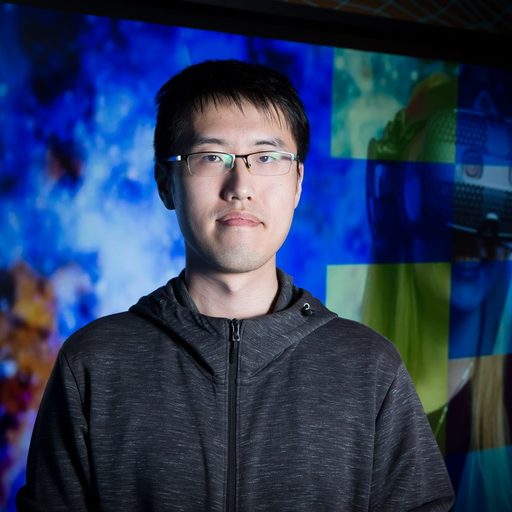
Portrait of Bowen Yuan

01 — Featured Research

Featured Research

Four systems that turn expert demonstrations into adaptive, spatially grounded augmented-reality guidance for real-world physical tasks.

02 — Other Research

Other Research

Ongoing and earlier work on embodied agents, immersive collaboration, and attention-aware AR.

SIGGRAPH Asia 2026Accepted

Adaptive Avatar Agents for Context-Aware VR Collaboration

Adaptive avatar agents are investigated as attention guides and collaboration partners in VR. The system records head pose, hand interaction, objects, voice, and task duration, then applies speech-to-text, vision-language models, and text embeddings so agents can review and respond to user activity. Agents transform between human, robot, animal, and object forms based on conversation context, task state, and environmental events.

  • VR
  • Virtual Agents
  • Adaptive Avatar
  • Multimodal
  • Embodied Interaction
Read full description

This project explores how AI-driven avatar agents can support attention guidance, task review, and collaboration in immersive VR environments. The system records user behaviour during VR tasks, including head position, head direction, hand interaction, grabbed objects, voice, and task duration, then uses speech-to-text, vision-language models, and text embeddings to help the agent review and respond to user activity. A key focus is adaptive avatar embodiment: the agent can transform between different avatar types, such as humans, robots, animals, fish, birds, and animated objects, based on conversation context, task state, environmental events, and possible biological signals. The project aims to investigate how avatar diversity, transformation, and environment-aware behaviour can make AI agents more expressive, noticeable, and useful in VR task guidance and collaborative scenarios.

IEEE VR 2026Published Workshop & Poster Abstracts

Facilitating Discussions in Immersive Virtual Meetings with Virtual Agents

Proactive virtual agents are studied as facilitators in immersive virtual meetings. A cloud-based LLM service tracks agendas, transcripts, time remaining, and participant talk time, then facilitates by introducing agendas, keeping time, encouraging quieter participants, and summarising discussion. A user study comparing passive and active agent behaviours suggests proactive facilitation improves discussion support while requiring nuanced timing to avoid distraction.

  • VR
  • Virtual Agents
  • LLM
  • Meeting Support
Read full description

This project investigates how proactive virtual agents can support collaboration in immersive virtual meetings. The system uses a cloud-based LLM service to track meeting agendas, transcripts, time remaining, and participant talk time, then provides timely facilitation such as introducing agendas, keeping time, encouraging quieter participants, and summarising discussion. A user study comparing passive and active agent behaviours suggests proactive facilitation can improve discussion support, while also requiring more nuanced timing to avoid distraction.

Ongoing research

Gaze-Adaptive Diminished Reality for Attention Management

Gaze-adaptive diminished reality is examined for managing visual attention in AR by selectively reducing irrelevant information. Two approaches are explored, binary visibility and multi-level transparency driven by gaze behaviour, with the system dynamically modulating scene visibility to guide attention without fully removing context. The work contributes to understanding how subtle visual suppression can support focus in complex environments.

  • AR
  • Diminished Reality
  • Attention Management
  • Gaze Tracking
Read full description

This project examines how Diminished Reality (DR) can be used to manage visual attention in AR by selectively reducing irrelevant information. Two approaches are explored: binary visibility and multi-level transparency based on gaze behavior. The system dynamically modulates scene visibility to guide attention without fully removing context. This work contributes to understanding how subtle visual suppression can improve focus in complex environments.

SIGGRAPH Asia 2023Published XR Program

The Fusion Nexus: Biocognitive Audio-Verbal Interface in Asymmetric XR Collaboration

FusionNexus is an asymmetric XR collaboration experience in which a VR player guides a real-world player through pose-based tasks. A machine learning model performs real-time pose detection, while the VR player's heartbeat, captured with a Shimmer PPG sensor, controls drum tempo in the background music to convey emotional and physical state. Players collaborate on a timed challenge under immersive pressure.

  • XR
  • Asymmetric Collaboration
  • Pose Detection
  • Physiological Sensing
  • Cross-Reality
Read full description

FusionNexus is an asymmetric collaboration experience where a VR player guides a real-world player through pose-based tasks. A machine learning model performs real-time pose detection, while the VR player's heartbeat — captured via a Shimmer PPG sensor — controls drum beat tempo in background music, conveying emotional and physical state across realities. The two players collaborate to complete a timed challenge under immersive pressure.

03 — Publications

Publications

Peer-reviewed papers, workshop abstracts, and juried XR program submissions. Venue metadata and author order follow the publisher DOI record.

  1. ACM CHI 2026 Extended Abstracts 2026 Extended abstract

    Dependency-Aware AR Guidance for Replaying Non-Linear Work

    Bowen Yuan, Zirui Xiao, Hyunwoo Cho, Mark Billinghurst, Gun A. Lee

  2. ACM OzCHI 2026 38th Australasian Conference on Human-Computer Interaction 2026 Conference paper Accepted

    STAGE: Non-Linear AR Task Guidance via Dependency Modeling (paper title to be announced)

    Adelaide, Australia · November 21–25, 2026

    DOI: 10.1145/3847401.3847407 ISBN 979-8-4007-2724-5/2026/11 CC BY licence
  3. IEEE VR 2026 Workshop & Poster Abstracts 2026 Poster / workshop abstract

    Location-Based Non-Linear Playback of AR Task Recording

    Bowen Yuan, Zirui Xiao, Hyunwoo Cho, Gun A. Lee, Mark Billinghurst

  4. SIGGRAPH Asia 2026 2026 XR program submission Accepted

    Adaptive Avatar Agents for Context-Aware VR Collaboration

    Accepted; DOI pending Demo video
  5. IEEE VR 2026 Workshop & Poster Abstracts 2026 Poster / workshop abstract

    Facilitating Discussions in Immersive Virtual Meetings with Virtual Agents

    Gun A. Lee, Bowen Yuan, Jonathon Hart, Theophilus Teo, Allison Jing, Mark Billinghurst, Heesook Shin, Yongho Lee, Youn-Hee Gil

  6. IEEE ISMAR 2025 2025 Conference paper
  7. ACM VRCAI 2024 2024 Conference paper
  8. SIGGRAPH Asia 2023 XR Program 2023 XR program submission

04 — Curriculum Vitae

Curriculum Vitae

Two-page PDF

Education, publications, and research experience. PhD in Computer Science conferred 28 September 2026.

05 — Contact

Contact

For research collaborations, academic enquiries, and industry research roles in XR, AI, and robotics.